Understanding Sex Hormone Binding Globulin (SHBG): A Key to Optimizing Testosterone Therapy
In hormone therapy, one critical factor is often overlooked: sex hormone binding globulin, commonly referred to as SHBG. Understanding how SHBG works is essential for optimizing testosterone therapy, particularly when symptoms don’t align with standard lab results.
This article explores what SHBG is, why it matters, and how it directly influences testosterone dosing and treatment outcomes—illustrated through a real-world patient case.
What Is SHBG?
Sex hormone binding globulin (SHBG) is a protein produced primarily by the liver that binds to sex hormones, including testosterone and dihydrotestosterone. It plays a dual role in the body.
On one hand, SHBG acts like a transport system, carrying hormones through the bloodstream. On the other, it can effectively bind hormones so tightly that they become unavailable for use by tissues. In that sense, SHBG can function less like a taxi and more like a gatekeeper.
Because of this, SHBG levels are a crucial piece of the puzzle when interpreting testosterone labs and making informed treatment decisions.
A Real-World Case: George
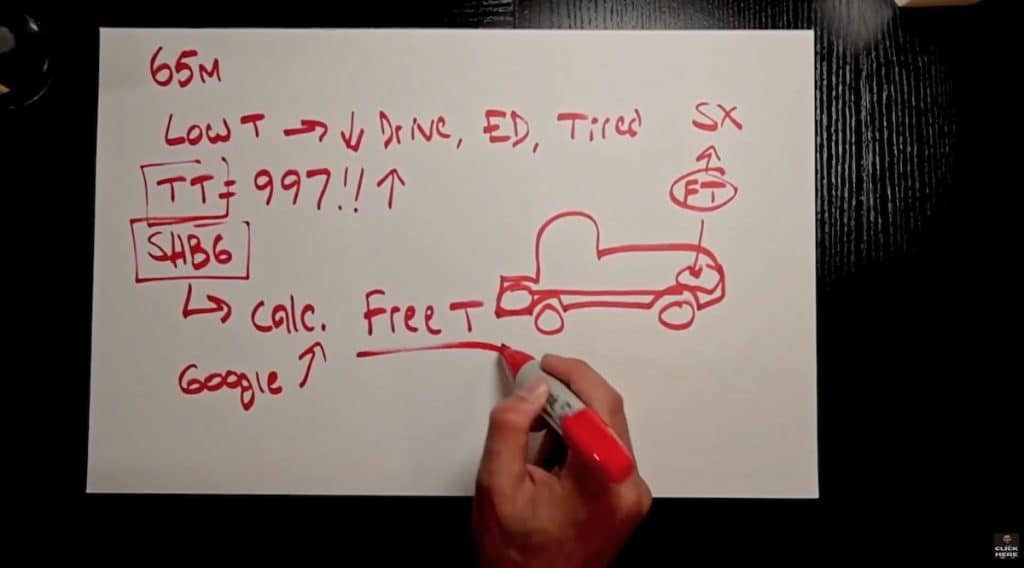
Consider the case of George, a 65-year-old man who is fit, active, and otherwise healthy. Despite this, he was experiencing classic symptoms of low testosterone, including fatigue and reduced libido.
Initial lab work showed a total testosterone level of 997—well above average. On paper, everything looked fine. In reality, George felt far from optimal.
Further testing revealed the missing piece: his SHBG level was 115, far above the typical reference range of 25–35. This elevated SHBG was binding up most of his testosterone, leaving very little available for his body to actually use.
As a result, George’s free testosterone level was only 6, significantly below the optimal range of 20–40.
Why Free Testosterone Matters More Than Total Testosterone
Total testosterone tells you how much testosterone exists in the body. Free testosterone tells you how much is actually usable.
A helpful analogy is fuel in a car. Total testosterone is how much gas is in the tank. Free testosterone is how much fuel is reaching the engine. For performance and well-being, the engine only cares about what it can actually use.
This distinction is critical. Patients can have high total testosterone and still experience symptoms if SHBG is preventing that testosterone from being available at the tissue level.
Testosterone Therapy and SHBG-Driven Dosing
In George’s case, the appropriate solution was testosterone replacement therapy (TRT). By administering testosterone cypionate at a higher dose, the goal was to saturate SHBG, allowing more testosterone to remain unbound and biologically active.
This approach is particularly relevant for older men, as SHBG levels tend to increase with age.
When designing a testosterone protocol, SHBG should guide both dosing and frequency:
- High SHBG often requires higher doses and less frequent injections
- Low SHBG may respond better to lower doses given more frequently
Ignoring SHBG can lead to under-dosing, poor symptom relief, and frustration for both patients and providers.
Key Takeaways
Sex hormone binding globulin plays a central role in testosterone therapy outcomes. It affects how much testosterone is available, how treatment should be dosed, and how frequently it should be administered.
As George’s case illustrates, total testosterone alone does not tell the full story. Measuring and understanding SHBG allows for more precise, effective, and individualized hormone therapy.
For clinicians and patients alike, mastering SHBG is a critical step toward optimizing results and improving quality of life.