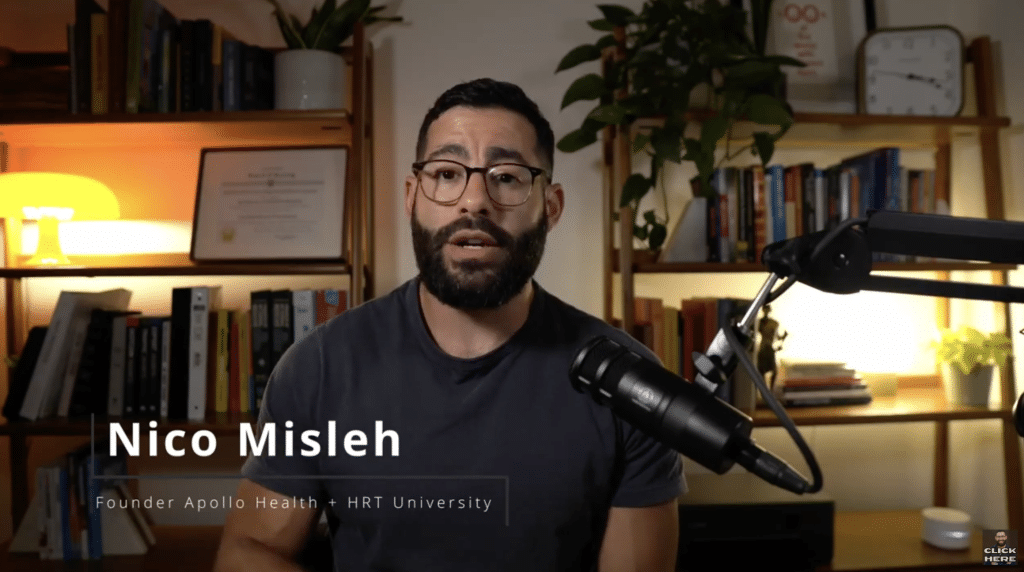
In a solo episode of the Nico Misleh Podcast, Nico Misleh walks listeners through the path that led him from a science-obsessed child to a nurse practitioner building a new model of care. He explains why he left the insurance-driven system, how cash-based clinics have freed him to practice the art of medicine, and why hormone replacement therapy (HRT) and testosterone replacement therapy (TRT) are central to the future of patient care. This article summarizes what Nico shared, distills the lessons for clinicians, and offers practical steps for anyone ready to change how they practice.
Early influences: curiosity, nature, and a grandfather’s example
Nico traces his journey back to childhood. He remembers being obsessed with science, nature, and exploration. That early curiosity blended with the influence of his grandfather, a retired physician who became a model of professional humility and warmth. Watching his grandfather care for patients left a strong impression. It planted the idea that medicine could be both scientific and deeply human.
“I always knew I wanted to help people and I always knew I wanted to get into science,” Nico says. “Becoming a nurse practitioner felt like the most amazing profession of all times.”
That mix of a science-driven mind and a heart set on service shaped the decisions that came later. It also made the limitations of modern, insurance-centered practice feel especially stark, because the model often rewards throughput over relationship.
Why cash-based clinics: reclaiming the art of medicine
Nico explains that early mentors were key in changing his view of how medicine could be practiced. Those mentors encouraged stepping out of the insurance treadmill and into cash-based care models. In his experience, cash-based clinics restored several core features of medicine that had been lost:
- Longer appointment times and deeper relationships with patients.
- The ability to use clinical judgment instead of being constrained by formularies and insurance rules.
- A focus on root-cause evaluation and individualized care plans.
By moving away from insurance-dictated care, Nico found he could treat people the way physicians treated patients “in the olden days.” That freedom made it possible to deliver better outcomes and to feel ethically aligned with his work.
HRT and TRT: a pragmatic, evidence-based tool
Hormone replacement therapy stood out to Nico because it offered both objective and subjective validation. Hormone levels can be measured, treatments adjusted, and improvements clearly observed in a patient’s life. That mix of measurable physiology and meaningful human change made HRT a practical choice in a field often plagued by murky or unproven interventions.
“HRT was this shining light in a world of a lot of murky water,” Nico explains. “We had evidence behind it, clinical data, and we could observe life-changing outcomes.”
Nico argues HRT is not just for older adults or a narrow demographic. He sees it as a foundational therapy that benefits young and old, men and women, and those with conditions like PCOS, debilitating fatigue, depression, and hormonal decline tied to aging. For Nico, hormones form the physiological foundation on which other therapies and life goals can be built.
Overcoming stigma and cognitive bias
One of the early challenges Nico faced was internal and external skepticism. Providers worry about regulatory scrutiny, criticism from peers, and the stigma attached to hormones, TRT in particular has a public image problem. Yet many of those fears are rooted in cognitive bias: learned assumptions handed down through medical training and professional culture.
Nico encourages clinicians to examine those biases and to approach medicine with humility and curiosity rather than defensiveness. He notes that much of medical education is passed down as received wisdom. That can be helpful, but it can also blind clinicians to treatments that are effective but underused.
“Most of us don’t recognize our cognitive biases. We were taught by mentors who were taught the same way. It’s okay to admit things change and to learn anew.”
Admitting uncertainty and being willing to re-evaluate long-held assumptions is essential. For Nico, that openness unlocked better patient care and allowed him to become a more effective clinician and teacher.
Patient outcomes: the pathway to self-actualization
One of Nico’s most powerful themes is how hormonal health links directly to a person’s ability to thrive. He frames hormones as the foundation of Maslow’s hierarchy of needs, the bedrock that supports sleep, energy, cognition, mood, and motivation. Without hormonal balance, it’s difficult for patients to reach higher-level goals like creativity, productivity, and self-actualization.
He shares examples of patients who regained their energy and confidence after HRT, enabling them to start businesses, reconnect with family life, or pursue long-suppressed goals. Those transformations are, in his words, more meaningful than any single clinical metric.
Running a practice that aligns values and income
Nico tackles the sensitive subject of money in medicine. He rejects the idea that earning well from patient care is unethical. Instead, he reframes patient payments, particularly direct payments in cash-based models, as meaningful validation: “dollar bills are just applause from your people.”
Success for Nico is not just financial. It’s the combination of:
- Providing meaningful value and measurable improvements to patients.
- Making a living that supports family and personal goals.
- Teaching and scaling that care model to other clinicians.
That blend allows clinicians to escape the burnout of the insurance model while still building sustainable practices. Importantly, the financial benefits also fuel teaching, mentorship, and the capacity to reach more patients indirectly.
Why the demand for HRT is growing, and why the field needs more clinicians
Nico emphasizes that the market is far from saturated. Millions of people need hormonal care right now, and the number continues to grow. HRT is expanding beyond narrow categories and into mainstream care for a wide range of patients.
He challenges clinicians who fear they’ve “missed the boat” to step into the space. The reality is that demand outstrips supply, and more trained providers are needed to meet that need. Whether a clinician is a primary care provider, a cardiologist, a psychiatrist, or a nurse practitioner, understanding hormones is becoming essential to modern practice.
Training and mentorship: spreading the model
One of Nico’s big goals is not only to treat patients but to teach clinicians how to do this work themselves. He’s created courses and educational pathways to help clinicians get comfortable with HRT prescribing, lab interpretation, patient selection, and the business side of cash-based care.
For clinicians ready to learn now, Nico points to available training resources and emphasizes that practical mentorship accelerates confidence. He stresses that clinicians don’t need to reject all of their conventional training, rather, they should add new tools and fresh thinking to their toolkit.
Legacy and long-term purpose
Finally, Nico talks about legacy. His grandfather often spoke of his legacy, and that idea has come to matter deeply to him. Legacy, for Nico, is not fame or grand monuments. It’s the quiet, tangible impact of improving clinician practice and patient lives, people who, decades from now, benefit from a change in how medicine is taught and delivered.
“I hope the legacy I leave behind is one of hope and guidance, something that helps other providers treat patients differently and better.”
That sense of purpose is what fuels Nico’s work more than anything else. He hopes to touch millions of lives indirectly through clinicians who adopt this model and pass it on.
Practical steps for clinicians thinking about HRT and cash-based care
- Start with education. Learn the physiology, indications, contraindications, and monitoring for HRT and TRT. Reliable courses and mentorship can shorten the learning curve.
- Examine your biases. Reflect on training that discouraged certain treatments and ask whether the evidence supports those assumptions today.
- Begin small. Start by offering HRT to selected patients who fit clear criteria. Track outcomes and refine your protocols.
- Consider a hybrid model. If a full cash-based switch feels risky, pilot cash visits or a concierge option to test workflow and patient demand.
- Value your work. Build a practice that compensates you fairly for the time and expertise you provide. Financial sustainability allows you to provide better care.
- Teach and mentor. As you gain experience, share knowledge. Scaling impact through education is one of the fastest ways to grow the movement.
FAQ
Is HRT safe?
When prescribed correctly and monitored appropriately, HRT is safe for many patients. Like any treatment, risks depend on the individual’s health history, dosing, and follow-up. Proper training in indications, lab monitoring, and contraindications is essential.
Who benefits from HRT?
HRT can benefit a wide range of patients: older adults with age-related decline, younger patients with hormonal disorders, people with PCOS, and individuals with mood, energy, or sexual function issues tied to hormones. It’s not a universal cure, but it can be transformative for many.
What about legal and licensing concerns with cash-based care?
Clinicians must follow state regulations, licensing rules, and best practices. Cash-based medicine is legal, but providers should document care, maintain standards, and comply with prescribing laws. Consult legal or regulatory advisors when necessary.
Will the HRT market become oversaturated?
No. Demand is growing rapidly and there are not enough trained clinicians. The market is expanding across demographics and specialties. There’s plenty of room for ethical, well-trained providers.
How should a clinician handle peer skepticism?
Respond with data, measured outcomes, and humility. Offer to share evidence and patient success stories. Recognize that skepticism often reflects genuine concern but can be eased through transparent practice and good results.
Conclusion and a simple call to action
Nico Misleh’s message is both practical and hopeful. He invites clinicians to rethink how they practice medicine, move beyond restrictive systems, learn modern HRT approaches, and build care models that are both financially sustainable and deeply humane. He believes the future of medicine needs clinicians who combine scientific rigor with compassion, curiosity, and a willingness to change.
If you’re a clinician curious to learn more and to receive daily insights that will help you grow clinically and in business, consider joining Nico’s daily newsletter at https://nicomislehnp.com/. Yes, it’s every day, and many clinicians say they stay subscribed because the content is practical and immediately useful.For clinicians ready to dive into training, explore dedicated HRT education and courses to build confidence in prescribing and practice operations. The work Nico describes isn’t just about treating hormones; it’s about reshaping how medicine supports people at the most basic, powerful level—so they can do the things they dream of doing.